

Why Verify Property Documents Before Buying?
Purchasing property is a major financial commitment. Verifying legal documents ensures you avoid fraud, disputes, or hidden liabilities. Skipping due diligence could lead to legal battles, financial loss, or ownership issues.
Table of Contents
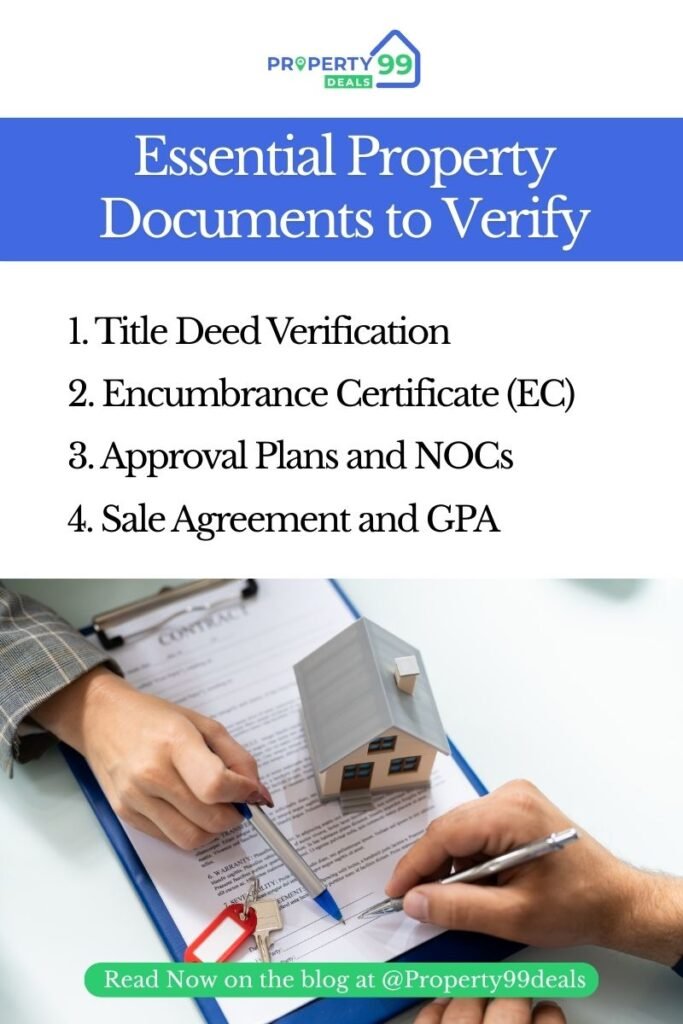
Essential Property Documents to Verify
1. Title Deed Verification
- What to Check: Confirm the seller is the legal owner and the title is free of disputes.
- Keyword Tip: Use “property title deed verification” for SEO.
- Internal Link: How to Check Property Ownership History
- External Link: Government Land Registry Guidelines
2. Encumbrance Certificate (EC)
- Purpose: Ensure the property has no pending loans or legal dues.
- How to Get It: Request a 12–15-year EC from the Sub-Registrar Office.
- Keyword Tip: Include “encumbrance certificate importance.”
3. Approval Plans and NOCs
- Verify building approvals from local municipal authorities (e.g., BBMP, MCGM).
- Check NOCs from electricity, water, and environmental departments.
4. Sale Agreement and GPA
- Ensure the Sale Agreement includes all terms, and a General Power of Attorney (GPA) is valid if applicable.
check this before : Step-by-Step Guide to Buying Your First Home in India (2024)
Steps for Property Document Verification
Step 1: Hire a Legal Expert
A property lawyer can spot red flags in documents and verify authenticity.
Step 2: Cross-Check with Local Authorities
Visit municipal offices to confirm approvals and land use zoning.
Step 3: Verify Seller Identity
Match the seller’s ID proofs with the title deed to prevent impersonation fraud.
Step 4: Check for Pending Taxes
Request tax receipts to ensure no outstanding property taxes.
Common Red Flags in Property Documents
- Missing signatures or incomplete forms.
- Mismatched survey numbers or boundaries.
- Unresolved inheritance disputes in the title.
Link for reference:
How to Avoid Property Scams
Common Property Fraud Cases
Conclusion
Verifying property documents is non-negotiable for a secure investment. Partner with legal experts, cross-check approvals, and scrutinize title deeds to avoid pitfalls. Protect your hard-earned money by prioritizing due diligence.
How do I check if a property is legally clear?
Obtain the title deed, encumbrance certificate, and NOCs from local authorities.
What if the seller refuses to share documents?
Walk away! Transparency is critical in property transactions.
Can a property be sold with a pending loan?
Only if the bank approves the sale and the loan is cleared during the transaction.
How long does document verification take?
Typically 2–4 weeks, depending on the complexity and local authority responsiveness.
Links for reference
- Understanding Stamp Duty and Registration
- Home Loan Documentation Checklist
- Ministry of Housing and Urban Affairs
- Legal Property Verification Tools